Transfer
A transfer moves money between two of your own accounts: from checking to savings, from savings to an investment account, or from your bank account to a credit card to pay it off.
Add a transfer
-
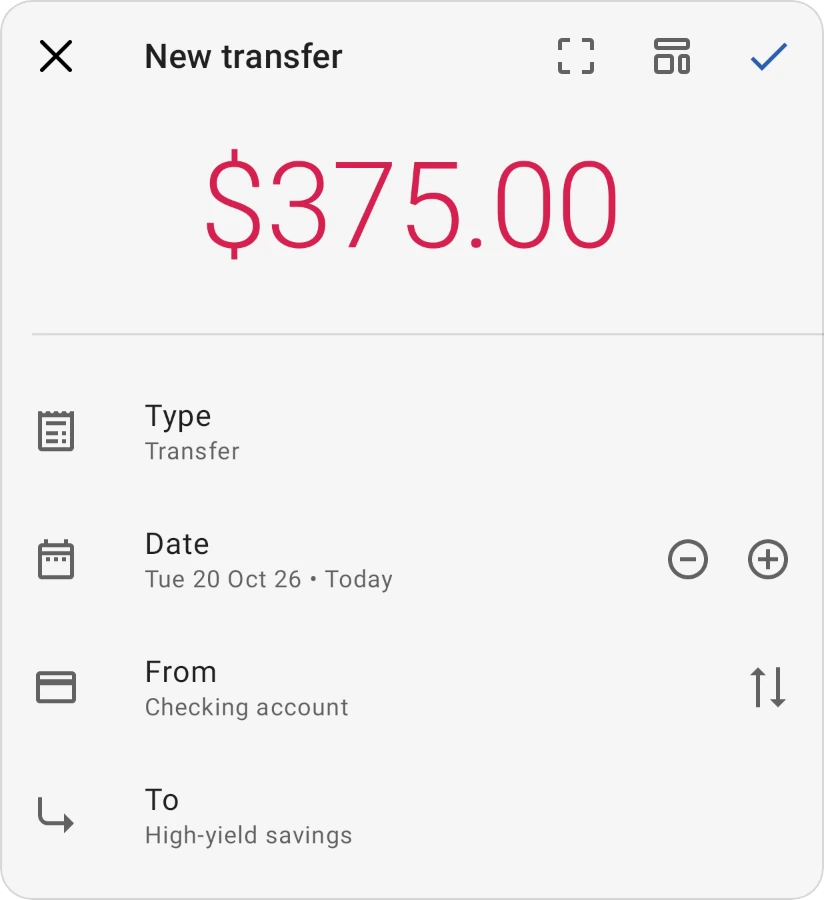
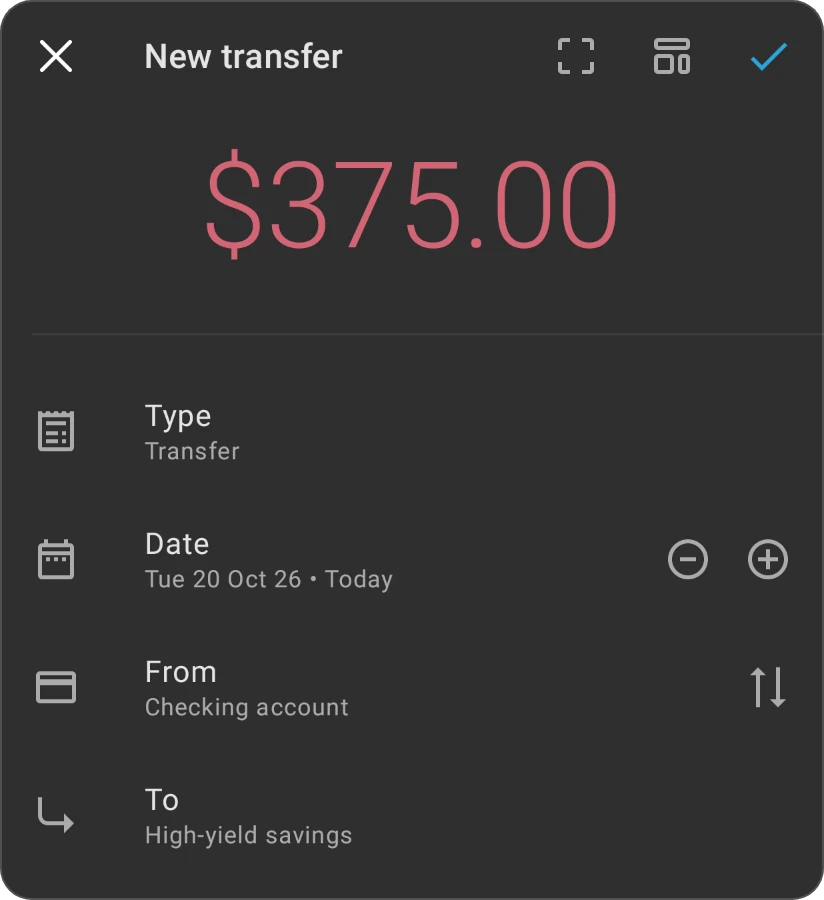
Tap Add in the bottom bar and choose New transfer.
-
Enter the amount.
-
From: the account the money leaves.
-
To: the account that receives it. Use the swap button next to From to switch the two accounts round. It isn't offered for credit cards, loans or foreign-currency accounts.
-
Tap the checkmark to save.
Transfers have no payee and no category, because the money stays with you.
Pay off a credit card
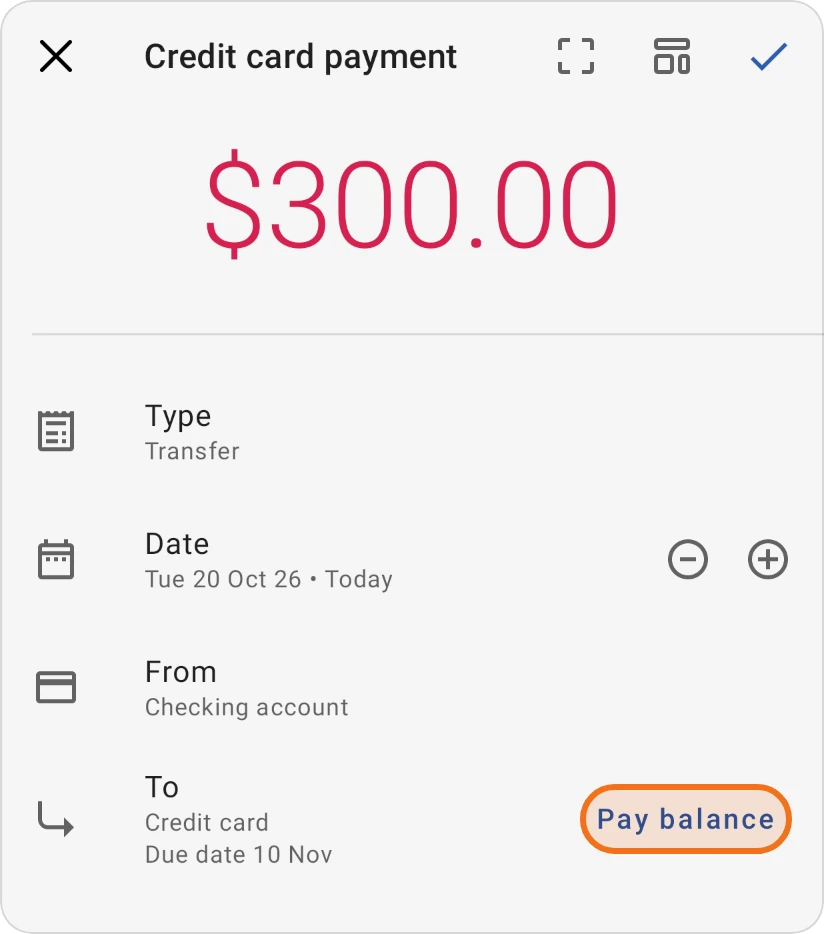
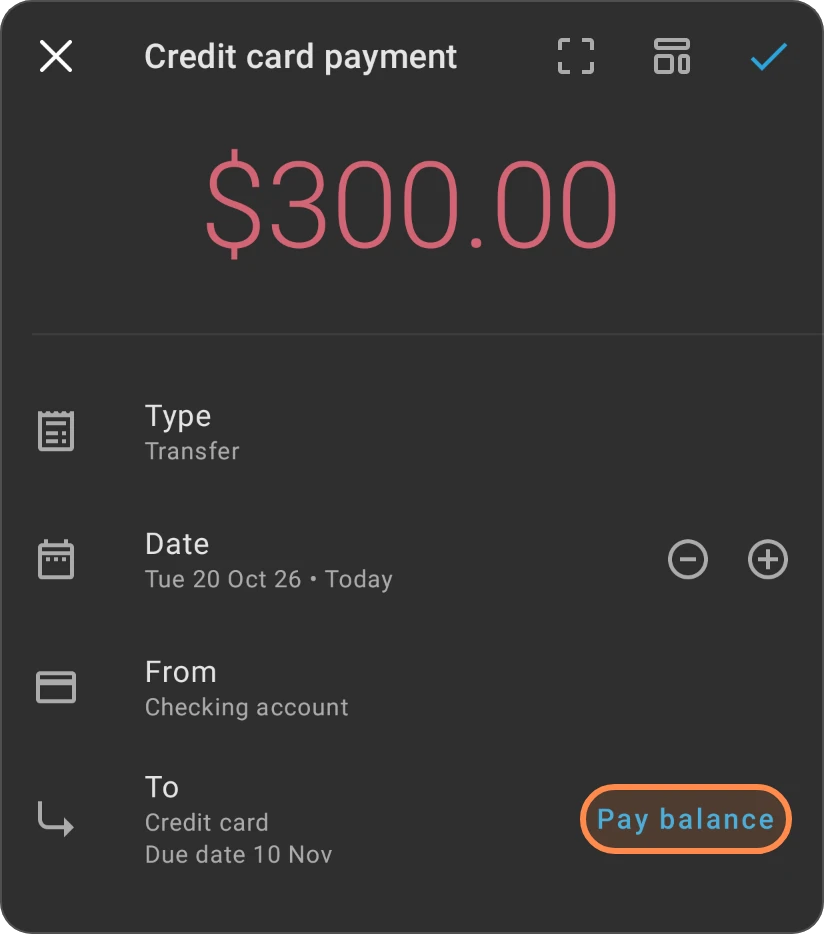
When the To account is a credit card, the screen is titled Credit card payment and shows the card's due date. Tap Pay balance to fill in the full amount you owe. If you pay more than you owe, the app warns you that the extra becomes a credit on your card. See Credit cards.
When the card or loan has no payment category
A transfer into a credit card or a loan counts as a payment only through the account's payment category (the category where you set money aside for it). If the card or loan isn't linked to one yet, the new transfer shows "Link this credit card to a payment category first, so this transfer counts as a payment." (or the same for a loan) and can't be saved. Tap Link category on that message to link one, then save the transfer. A transfer from elsewhere in the app, such as an import, is refused with "Link … to a payment category first, so transfers to it count as payments." See Credit cards and Large debts.
How transfers affect your budget
A transfer between two accounts in your budget doesn't change your categories. The money was already allocated when it came in as income; the transfer only changes which account holds it.
Moving money to an account that is off-budget (such as an investment or loan account you track outside your budget) is different: that money leaves your budget. In a zero-based budget the app warns you that it will lower the amount available to assign to categories.