CSV / PDF Export
Export a set of transactions to a file to analyse it in a spreadsheet, keep it for your records or share it with an accountant or partner. Files come as CSV (for Excel, Google Sheets or Numbers) or, with Pro, as a ready-to-share PDF. See a sample PDF.
Export search results
Smart search and Advanced search let you export exactly the transactions you found, for example all your groceries this month.
-
Search for the transactions you want.
-
Tap the export icon (Export data) at the top right. It's available once the search has found something.
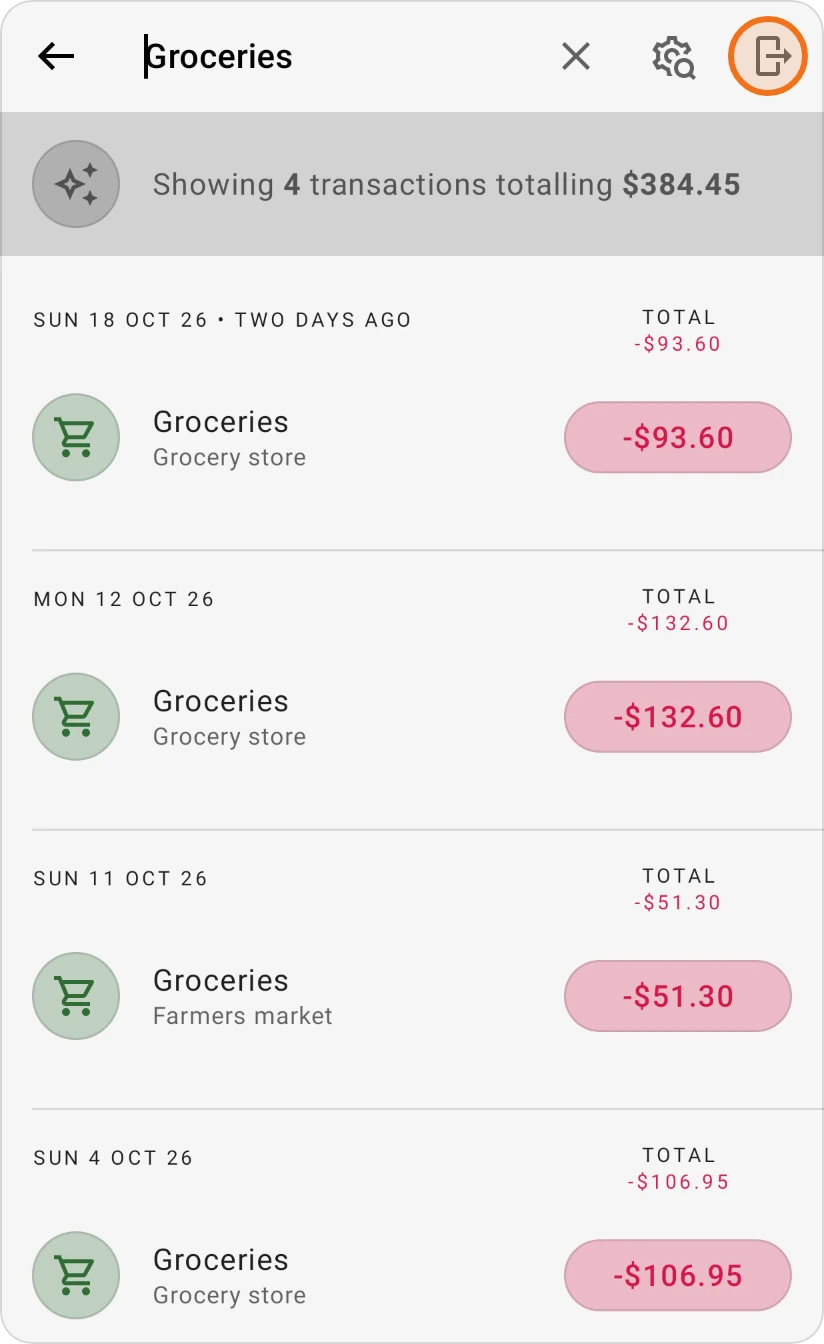
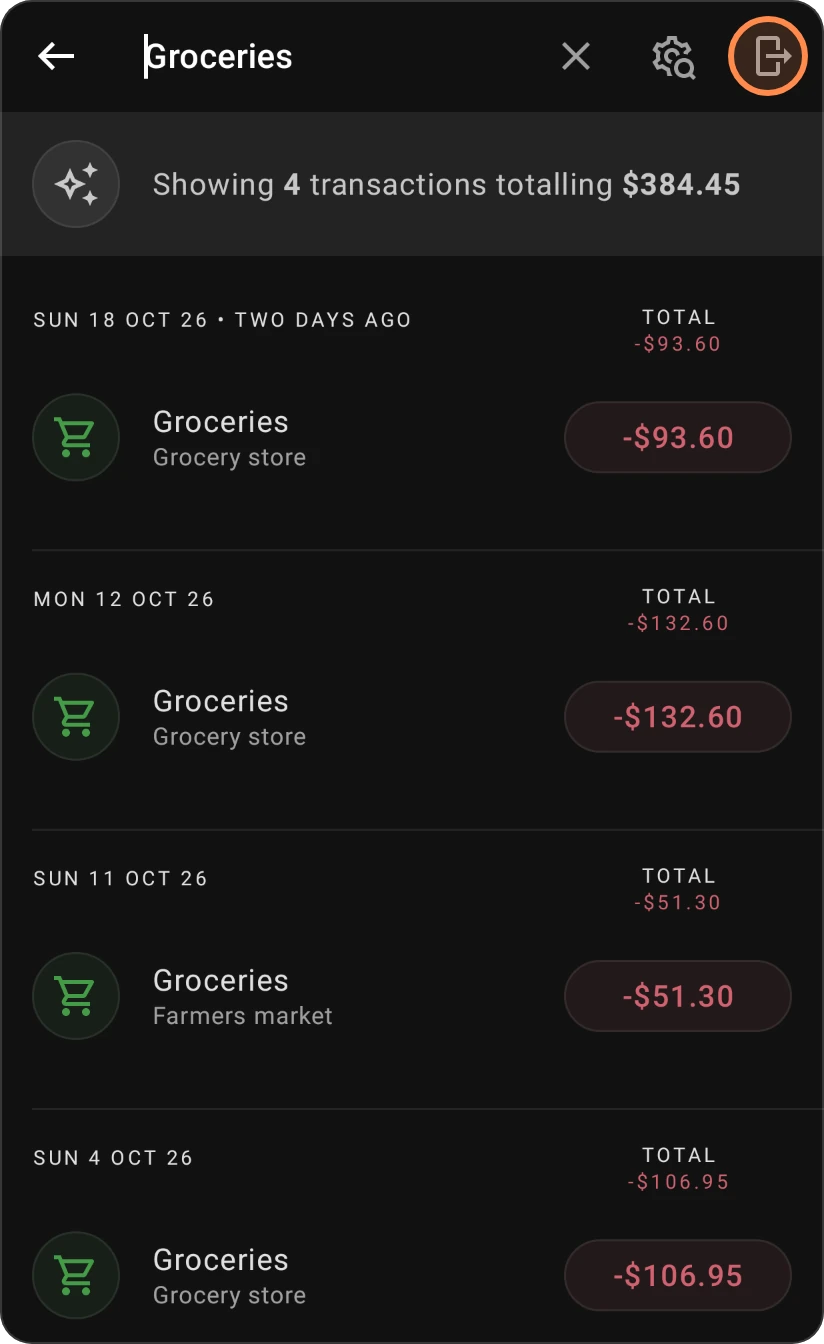
-
Review the preview, then save or share the file (see below).
In Advanced search, the same icon exports the results.
Export from an account, category, payee or tag
-
Open the account, category, payee or tag.
-
Tap the ⋮ menu at the top right.


-
Choose Export recent transactions. The file holds the transactions that screen lists. (In a category's spending overview, the menu item is called Export data.)
To export your whole history with date and type filters, use Export data in More › Profile; see Exporting your data. That's also where you get a Budget report: a PDF of your transactions grouped by account and category, with totals.
Preview, save and share
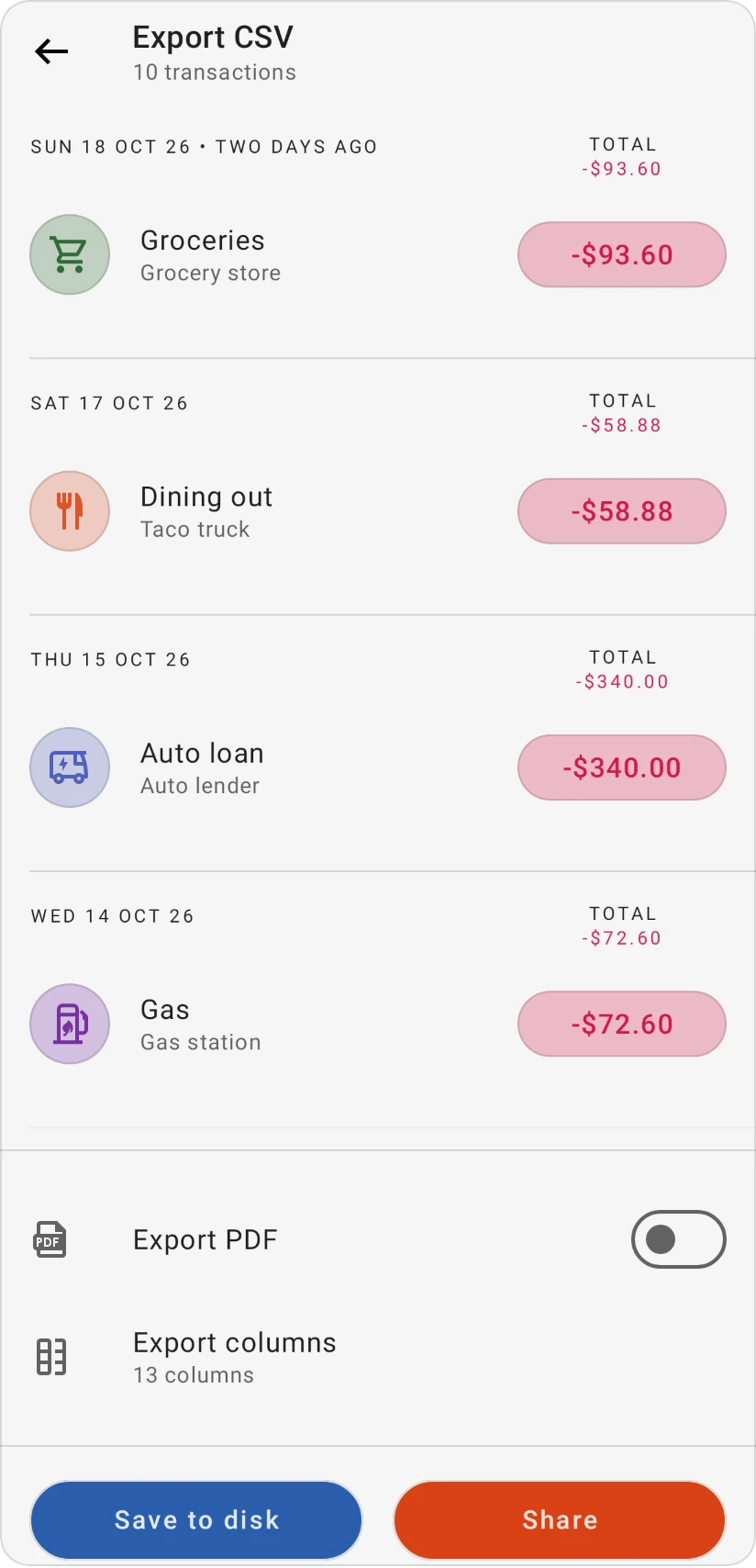
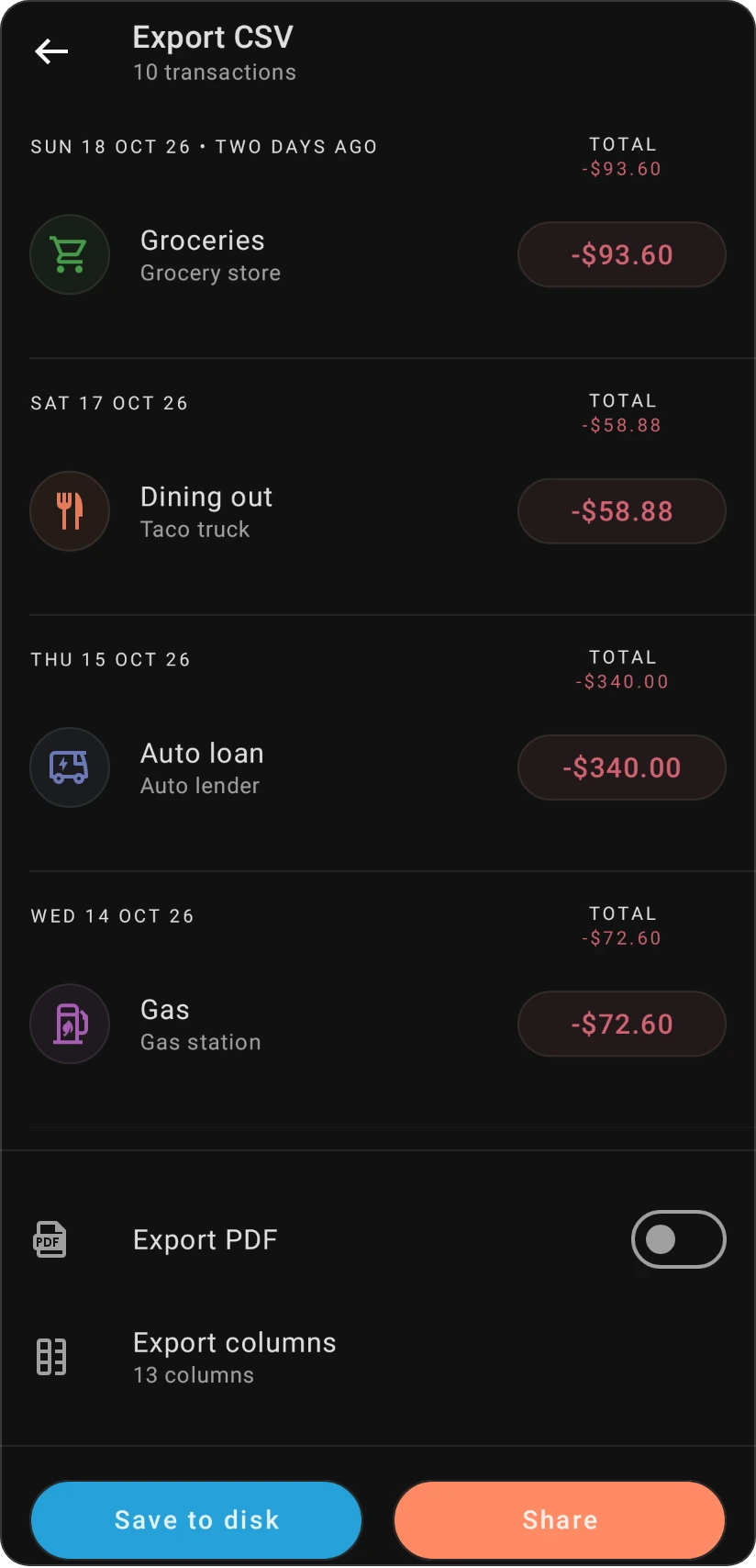
Before you save, a preview shows the transactions in the file, with how many there are under its title (Export CSV or Export PDF).
-
Export PDF: turn on to get a PDF instead of a CSV (Pro).
-
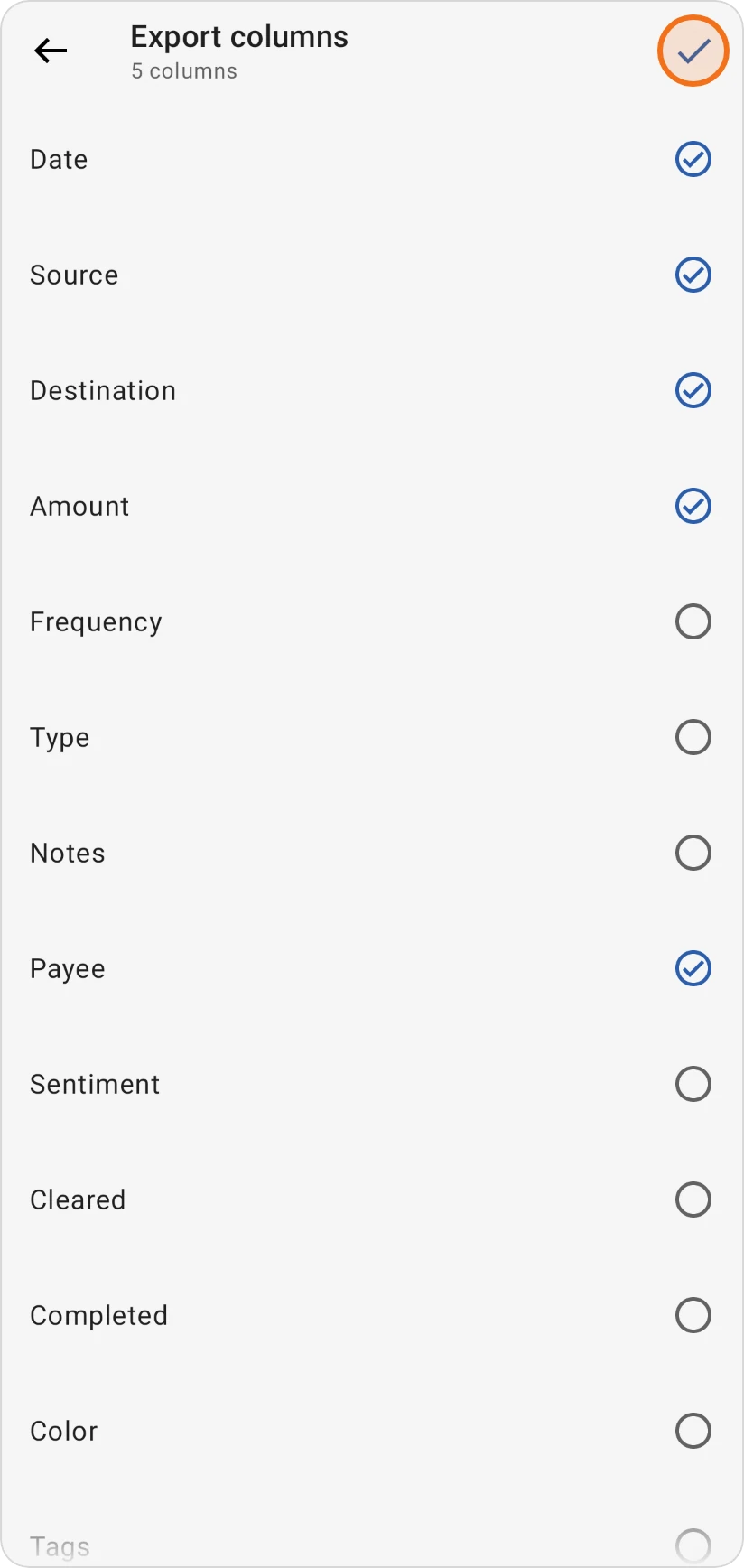
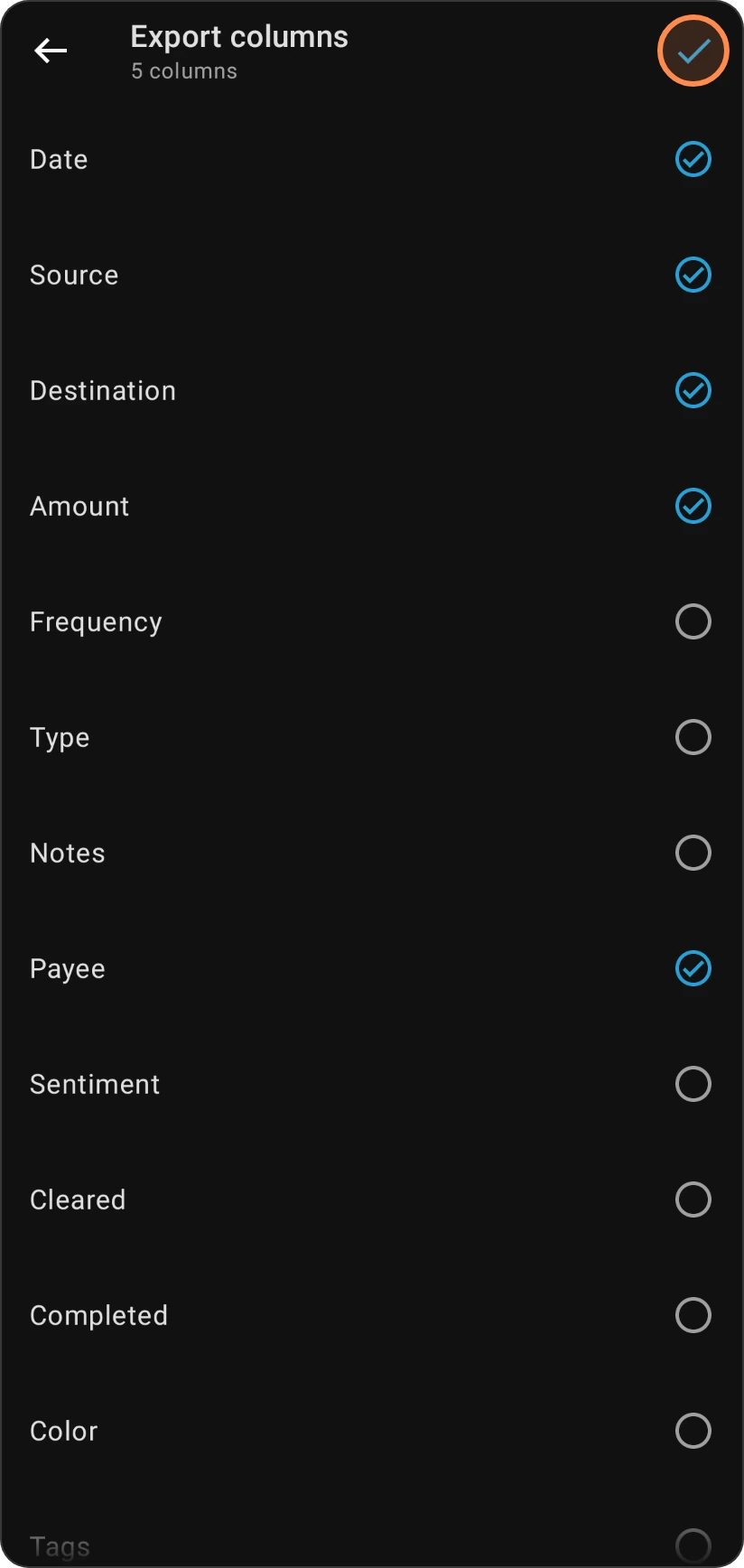
Export columns: choose which columns the file has, then tap the checkmark. A column you tick is added after the ones already ticked, so tick them in the order you want them in the file. The app remembers your columns for your next export. The columns are Date, Source, Destination, Amount, Frequency, Type, Notes, Payee, Sentiment, Cleared, Completed, Color and Tags.
-
Save to disk: save the file to your device. On Android it goes to the Documents › Beyond Budget folder; on iPhone and iPad, to the Files app under On My iPhone (or On My iPad) › Beyond Budget; on the web, the file downloads. The app confirms with File saved.
-
Share: send it to another app, such as email or a cloud drive, from your device's share options. On the web, your browser's share options open, or the file downloads if your browser can't share files.
What's in the file
CSV files are best for your own analysis: sort, filter and chart your transactions however you like. The first row names the columns, then there's one row per transaction, newest first, with dates and amounts written the way your language writes them. Values are separated by semicolons (;): if a spreadsheet puts each whole row in one cell, import the file again and choose the semicolon as the separator.
A PDF export from here is a transaction list: the same rows and columns, laid out to read, print or send, with the period it covers and the day you made it under its title. Up to five columns fit on an upright page; more turn the page sideways. The Beyond Budget server lays the PDF out, so you need to be online to make one.
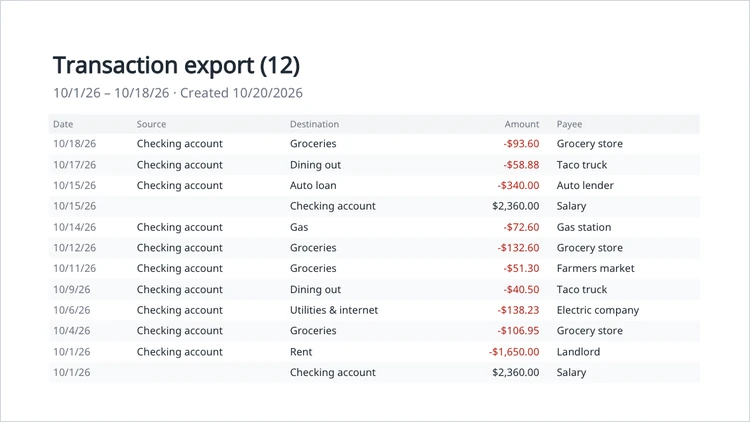
See a sample PDF or download a sample CSV of the same transactions: a household's everyday account for one month, with the columns Date, Source, Destination, Amount and Payee.
For a PDF grouped by account and category, with totals, export a Budget report from Export data.
CSV export is free. Exporting to PDF is part of Pro.